Terracotta and earthenware sewer pipes: what to know if your North Shore home has them
Clay sewer pipes can last for generations, but their joints are where roots and ground movement get in, and on the North Shore that is where most drain trouble starts.

Terracotta or earthenware sewer pipes are fired clay lines common under older North Shore homes. The clay itself lasts, but the joints let in tree roots and the brittle pipe cracks when the ground moves. If drains keep blocking, get a camera inspection: many clay lines only need clearing, and damaged ones can often be relined without digging.
Key takeaways
- Terracotta, earthenware and vitrified clay are all fired clay pipe, and Sydney Water still lists them among its pipe types.
- The joints are the weak point: tree roots get in there, and Sydney Water says roots are the most common cause of blockages.
- A sewer service diagram from Sydney Water shows where your private pipes run; a camera inspection shows what they are made of and their condition.
- An old clay line is not automatically a failing one. Repeated blockages, rain related slowdowns or a sunken patch are the signs to act on.
- Relining seals cracked and root damaged clay from the inside, which matters under protected trees in Ku-ring-gai.
Jump to a section8
- What earthenware and terracotta sewer pipes are
- Why so many older North Shore homes still have clay sewer pipes
- How earthenware sewer pipes fail
- Signs your clay sewer line needs attention
- How to find out whether your house has clay sewer pipes
- Repair options for old earthenware sewer pipes
- What fixing an old clay sewer line costs, and who pays
- Frequently asked questions
What earthenware and terracotta sewer pipes are
Terracotta, earthenware and clay pipes are, for a homeowner’s purposes, the same family: lengths of fired clay, usually orange brown, joined end to end with a socket at one end of each length that the next pipe sits inside. They were the standard material for house sewer lines for decades, and a lot of them are still in the ground and still working.
Sydney Water still uses the names. The legend in its guide to reading its Before You Dig plans lists earthenware (EW), vitrified clay (VC) and salt glazed ware (SGW) among its pipe types, and its Before You Dig guide to avoiding damage to its pipes names vitreous clay first among the materials its wastewater pipes may be made of, alongside PVC, polyethylene and concrete.
Why the material matters
- The pipe itself lasts. Clay does not rust, so a length that has never been disturbed can keep working for decades. That is why so many are still in service.
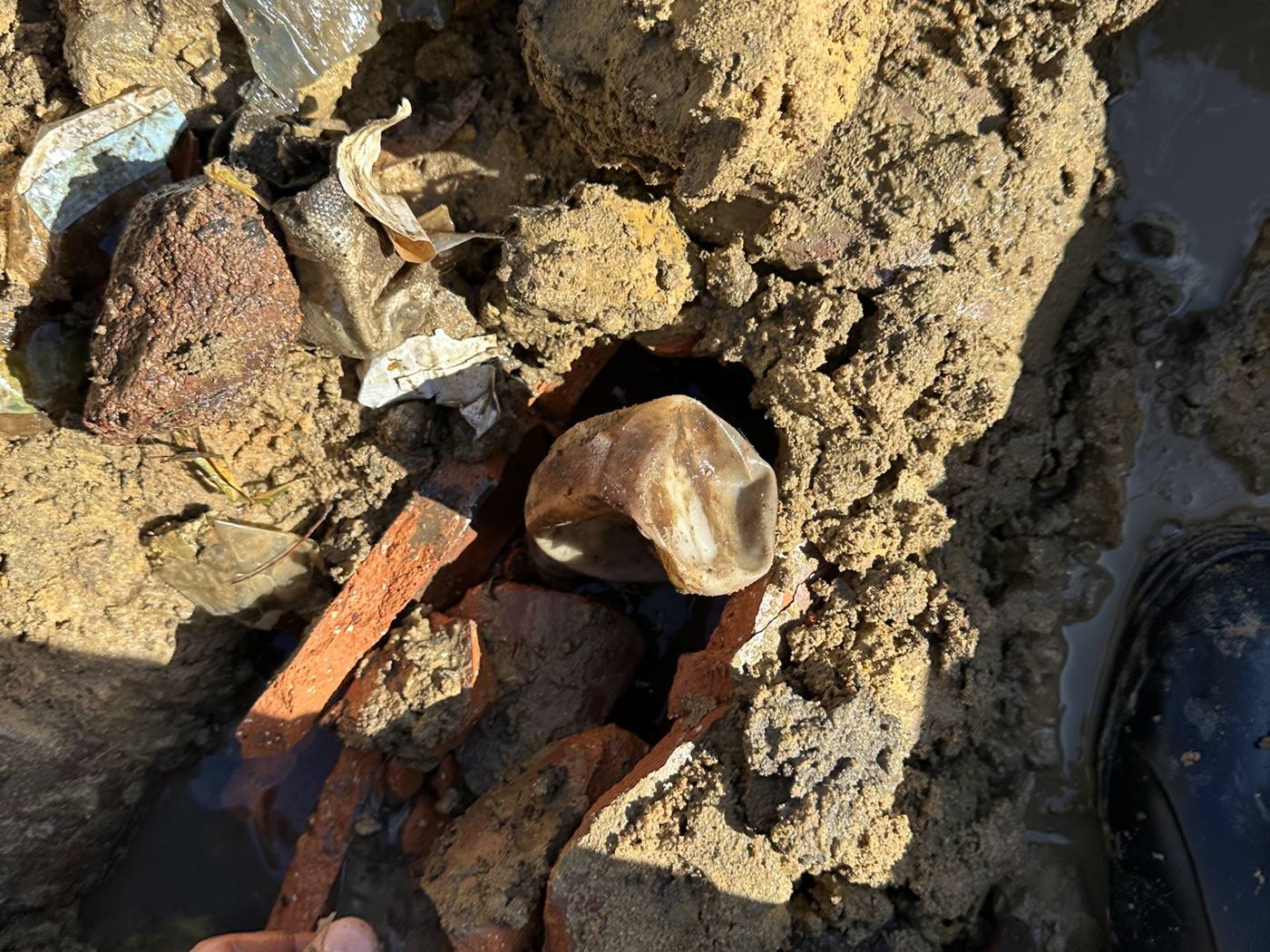
- The joints are the weak point. Each length meets the next at a socket, and an old line has a joint every length or so. That is where roots get in, where the ground moves the pipe, and where most of the trouble starts.
- It is brittle. Clay does not flex. Ground movement, a heavy load above or a root thickening against it will crack it rather than bend it.
Why so many older North Shore homes still have clay sewer pipes
The North Shore’s housing is old by Sydney standards, and old houses tend to keep their original drains until something forces a change. Ku-ring-gai Council describes its heritage items as predominantly fine houses and gardens from the Federation to post-war periods of the twentieth century. Houses of that age that have never had their sewer line replaced commonly still drain through clay.
The second North Shore factor is the trees. Sydney Water’s list of trees to avoid planting near wastewater pipes, on its wastewater blockages page, includes figs, jacarandas, brush box, large gums, liquidambars and lilly pillies. Plenty of those species shade the older streets and gardens of the North Shore. Sydney Water recommends keeping trees at least 6 metres from wastewater pipes, and many older gardens were planted long before anyone thought about where the sewer ran.
Put the two together, decades-old clay joints under a mature canopy, and you get the most common drain problem we see on older North Shore blocks.
How earthenware sewer pipes fail
Clay lines rarely fail all at once. They usually go through a long stage of small, repeatable problems first, which is the stage worth catching.
Tree roots through the joints
Sydney Water says tree roots that find their way into the pipes are the most common cause of blockages. Fine roots find the moisture at an old joint, grow through it, and thicken into a mat that catches paper and wipes. Cutting them out clears the pipe, but the joint is still open, which is why the same drain often blocks again a year later. We cover that cycle in more detail in our guide on how tree roots keep blocking the same drain.
Cracks and broken sockets
Because clay is brittle, a root pressing against the outside of a pipe, a car parked over a shallow line, or settling soil can crack a length or snap off the socket. Once a section is broken, soil and debris can fall into the line and the flow catches on the broken edge.
Joints that have moved
On a sloping sandstone block the ground shifts a little with every wet and dry season. Over decades that can pull one length out of line with the next, leaving a lip that sewage catches on. A camera shows this clearly as a step in the pipe.
Water getting in, not just out
A broken clay line lets groundwater and rain in. Sydney Water says extra water can enter the wastewater system through cracked pipes and faulty joints between pipes, and lists heavy rain as a common reason for overflows. If your drains only struggle after a storm, a leaky clay line is one of the possible reasons.

Signs your clay sewer line needs attention
Sydney Water lists the warning signs of a wastewater blockage on its blockages page: sinks, bath or toilet emptying slowly, a toilet that is not flushing properly or has overflowed, a toilet or floor drain making gurgling noises, and wastewater overflowing from the gully near your outside tap. On a clay line, some patterns point to the pipe itself rather than something flushed.
| What you notice | What it often means on a clay line | What to do |
|---|---|---|
| Slow drains throughout the house | A partial blockage in the main line, often roots at a joint | Have it cleared and look at it with a camera |
| The same drain blocks every year or two | An open joint or crack that roots keep coming back through | Camera inspection before paying for another clear |
| Water rising in the outside gully | A blockage somewhere between the gully and the sewer | Stop using water and call a plumber |
| Drains struggle mainly after heavy rain | Groundwater or stormwater getting in through cracks or joints | Camera inspection to find where it enters |
| A soggy or sunken patch over the line | A broken pipe leaking into the soil | Book it in soon, before the hole grows |
| Nothing wrong at all | An old line that may be fine | Nothing urgent; inspect before a renovation or a big planting |
If neighbours are affected too, or there is an overflow from a maintenance hole on public land, Sydney Water says the problem is probably in its system. Report it on 13 20 90, which runs 24/7.
Want this looked at rather than guessed at? Voyager agrees a fixed price before the work starts, and there is no callout fee on eligible jobs.
Call 0485 028 787 or read more about pipe relining on the North Shore.
How to find out whether your house has clay sewer pipes
You do not need to dig anything up to find out. Work through these in order.
- Get your sewer service diagram. Sydney Water’s diagrams and prints page says these diagrams are what plumbers use when fixing private wastewater pipes, and you can buy one direct through Sydney Water Tap in or through a Property Link broker. Its fact sheet on reading the diagram explains that it shows your wastewater pipes, not Sydney Water’s. It shows where the line runs, which is half the answer.
- Look at what is visible. The outside gully, an inspection opening or the riser over a boundary trap can show the pipe material at the surface. Orange brown glazed fittings usually mean clay; grey or white usually means PVC.
- Think about the house’s history. A house that has had a full bathroom and drainage renovation may have had its line replaced. One that has not is more likely to be on the original pipes.
- Book a camera inspection. This is the only way to see the whole line: the material, every joint, any roots and any cracks, with a recording you can keep. Our drain camera inspections for North Shore homes show you the footage on site.

Before you buy a house with an old clay line
Sydney Water notes that selling agents and conveyancers use sewer service diagrams when a property is bought or sold. Ask for one, and if the house is old and the garden has big trees, a camera inspection before you exchange is cheap next to finding a collapsed line after you move in.
Repair options for old earthenware sewer pipes
An old clay line is not automatically a line that needs replacing. The right fix depends on what the camera shows.
| Option | When it suits | What to weigh up |
|---|---|---|
| Clear and monitor | One blockage, the camera shows sound pipe and only minor root entry | Cheapest now, but roots return through the same joint |
| Root cutting and jetting | Roots at several joints, pipe otherwise intact | Restores flow; does not seal the joints |
| Pipe relining | Cracks, open joints or repeated root entry along a line that is still in shape | Seals joints from the inside without digging up the garden or the tree |
| Dig up and replace | Collapsed sections, a badly sagging line, or a pipe too broken to reline | Permanent new pipe, but excavation, reinstatement and tree rules apply |
Why relining suits clay lines under big trees
Relining installs a new pipe inside the old one, curing a resin liner against the clay so the joints and cracks are sealed from the inside. Sydney Water uses it on its own network: its Wastewater Fix program describes repairing wastewater pipes by using high pressure jets to clean them and remove tree roots, and then relining the pipes.
The big advantage on the North Shore is the tree. In Ku-ring-gai, the council’s tree and vegetation preservation controls count excavation or trenching in a tree’s root zone, and severing roots of 50mm or more, as injuring the tree, which is prohibited without the council’s written consent unless an exemption applies. Relining works from access points, so the root zone is left alone.
It is not always the answer. A line that has collapsed, or has sagged badly enough to hold water, still needs digging. Our side by side look at relining and digging up goes through that decision in detail, and our sewer line repairs for North Shore properties cover the excavation side.

Who can do the work
Any work on a sewer drain in NSW is licensed work. The NSW Government’s page on plumbing, draining and gasfitting work says you need a licence or certificate to do any plumbing, draining or gasfitting work regardless of the cost, and defines draining to include the maintenance, repair and renewal of sanitary drains that connect to a sewer. That covers relining as much as digging.
What fixing an old clay sewer line costs, and who pays
These are indicative figures to judge a quote against, not a quote. The drain clearing and inspection figures are Sydney market ranges; the relining figures are Voyager’s own indicative rates.
| Job | Indicative range |
|---|---|
| CCTV drain inspection | $250 to $550 |
| High pressure jetting | $250 to $600 |
| Root cutting | $400 to $1,200 |
| Relining, 100mm pipe, per metre | $450 to $800 |
| Relining, 150mm pipe, per metre | $550 to $1,000 |
| Relining setup and establishment | $2,000 to $4,000 |
Relining is priced as setup plus metres times the rate. As a worked example, 8 metres of 100mm pipe is setup of $2,000 to $4,000 plus $3,600 to $6,400 of lining, so $5,600 to $10,400 in total. Access, depth, the number of junctions and what the camera finds all move the figure.
Which part of the line is yours
Sydney Water’s guidance on maintaining your service says it owns the junction, but the property owner is responsible for their connection to its wastewater system, the point of connection. It also says the owner is responsible for clearing tree roots that enter the junction at the point of connection, and for damage to the junction or junction collar caused by tree roots or excavation.
- Your private clay line, from the house to the point of connection: yours to maintain and repair.
- Roots at the junction: yours to clear.
- Sydney Water’s main and its maintenance holes: Sydney Water’s. If a licensed plumber finds the blockage is in its pipes, its blockages page says you may be able to claim reasonable out-of-pocket expenses.
If your camera footage shows cracked or root-filled clay, our team handles relining old clay sewer pipes on the North Shore and will show you the before and after footage. For anything else in the house, Voyager’s licensed plumbers serving the North Shore are a phone call away.
Frequently asked questions
Are terracotta and earthenware pipes the same thing?
For a homeowner, yes. Both are fired clay pipe. Sydney Water’s plan legend lists earthenware, vitrified clay and salt glazed ware as separate pipe types, but in the ground they share the same traits: durable pipe, weak joints, brittle under load.
Do clay sewer pipes have to be replaced?
No, not just because of their age. A clay line that drains well and shows sound pipe on camera can stay. Replace or reline when the camera shows cracks, open joints with root entry, displaced joints or collapse, or when the same line keeps blocking.
Can you reline a terracotta pipe?
Usually, yes. The line is cleaned and the roots cut out, then a resin liner is cured inside the old clay pipe, sealing the joints and cracks. A section that has collapsed or sagged badly may need to be dug up first.
How do I know if my house has clay sewer pipes?
Order your sewer service diagram from Sydney Water to see where the line runs, look at the gully and any inspection openings for orange brown clay fittings, and book a camera inspection to see the whole line, including its condition.
Who pays to fix a broken clay sewer pipe?
On a house, usually the owner. Sydney Water says owners are responsible for their wastewater pipes up to the point of connection and for clearing tree roots that enter the junction. Problems in Sydney Water’s own pipes are Sydney Water’s to fix.
In short
Terracotta and earthenware sewer pipes are fired clay lines that still serve many older North Shore homes. The clay lasts; the joints are where roots and ground movement get in. If your drains keep blocking, slow down after rain or the ground over the line has sunk, get a camera inspection before paying for another clear. Many clay lines only need clearing, and damaged ones can often be relined without digging under protected trees.
Need a licensed North Shore plumber?
Free quote, a fixed price agreed before the work starts, and someone on the end of the phone at any hour. No callout fee on eligible jobs, subject to current terms.
Call 0485 028 787Get a free quote
NSW Contractor Licence 476657C · fully insured · 24/7
Share this guide
Read it with an AI assistant
Mathew is a licensed plumber, drainer and gasfitter, and the owner of Voyager Plumbing. He has held his own NSW contractor licence since December 2016 and is the nominated supervisor on the company licence.
Voyager Plumbing works across Sydney’s North Shore. NSW Contractor Licence 476657C, fully insured, available 24/7.
Sources
- Sydney Water, Before You Dig: Avoid damaging our pipes (PDF, SW79 09/22)
- Sydney Water, Guide to reading Sydney Water Before You Dig plans (PDF, SW68 09/22)
- Sydney Water, Wastewater blockages
- Sydney Water, Avoid wastewater overflows
- Sydney Water, Maintaining your service
- Sydney Water, Diagrams and prints
- Sydney Water, Help with your sewer service diagram (PDF)
- Sydney Water, Wastewater Fix
- NSW Government, Plumbing, draining and gasfitting work
- Ku-ring-gai Council, Heritage and density
- Ku-ring-gai Development Control Plan, Part 13 Tree and Vegetation Preservation (PDF)