Stormwater drainage on a sloping block: a North Shore guide
On a hillside block, rainwater has to go somewhere, and the rules on where it can go are stricter than most owners realise.

On a sloping block, stormwater has to be collected and taken to a council or Sydney Water drainage system, without causing problems on a neighbour’s land. If the block falls away from the street, that usually needs a drainage easement through the properties below. Retaining walls need their own subsoil drainage connected to the stormwater system.
Key takeaways
- Councils expect stormwater to reach a public drainage system, not run off onto the next property.
- A block that falls away from the street usually needs an inter-allotment drainage easement to drain legally.
- Easement pipes through private land stay private, so maintaining them is an owner’s job unless the title says otherwise.
- A retaining wall needs a subsoil pipe and gravel behind it, connected to stormwater and never to the sewer.
- Stormwater must stay out of the sewer, and a low or damaged overflow relief gully is a common way it gets in.
Jump to a section8
Why sloping blocks have stormwater problems
Water always takes the shortest way downhill, and on a sloping block that way often runs across a lawn, under a house or straight into the neighbour’s yard. The North Shore has more than its share of these blocks: sandstone ridges, gullies running down to the harbour and the Lane Cove River, and houses stepped into the hill with retaining walls holding up the garden.
Councils see the results. North Sydney Council’s development control plan for stormwater opens by saying that nuisance drainage problems are one of the most commonly reported complaints councils receive.
The trouble usually comes from one of three places:
- Roof water from downpipes that are disconnected, cracked or running into a garden bed.
- Surface water running down the slope from higher ground, including from uphill neighbours.
- Groundwater moving through the soil after rain and building up behind retaining walls and against the house.
Where stormwater from your property is allowed to go
You cannot simply let roof and surface water run off the block. Councils expect it to be collected and taken to a proper drainage system, and how that works depends on which way your land falls.
Ku-ring-gai Council’s water management controls sort every property into one of four location types, and the rules for discharging stormwater follow from that:
| Ku-ring-gai location | What the land drains to | What it means for you |
|---|---|---|
| Location A | A council or Sydney Water drainage system in the road or a drainage reserve, without crossing another private property | Usually a pipe to the kerb or a council pipe out the front |
| Location B | A natural waterbody that crosses or adjoins the site | Discharge rules for the creek or watercourse apply |
| Location C | Bushland | Discharge has to protect the bushland it flows into |
| Location D | A drainage system reached only by crossing other private or public land | An inter-allotment drainage easement is usually needed |
The same council says stormwater that is not kept for use or soaked into the site should generally go to the public drainage system of gutters, streets and pipes, with particular regard to the effect on properties downstream.
The rule every council shares
Your stormwater should not cause problems on anyone else’s land. North Sydney’s plan says it outright: drainage from private property should not cause nuisance drainage to any other property, and stormwater should not be diverted into an adjoining catchment unless it can be shown that it will not cause harm.
Blocks that fall away from the street
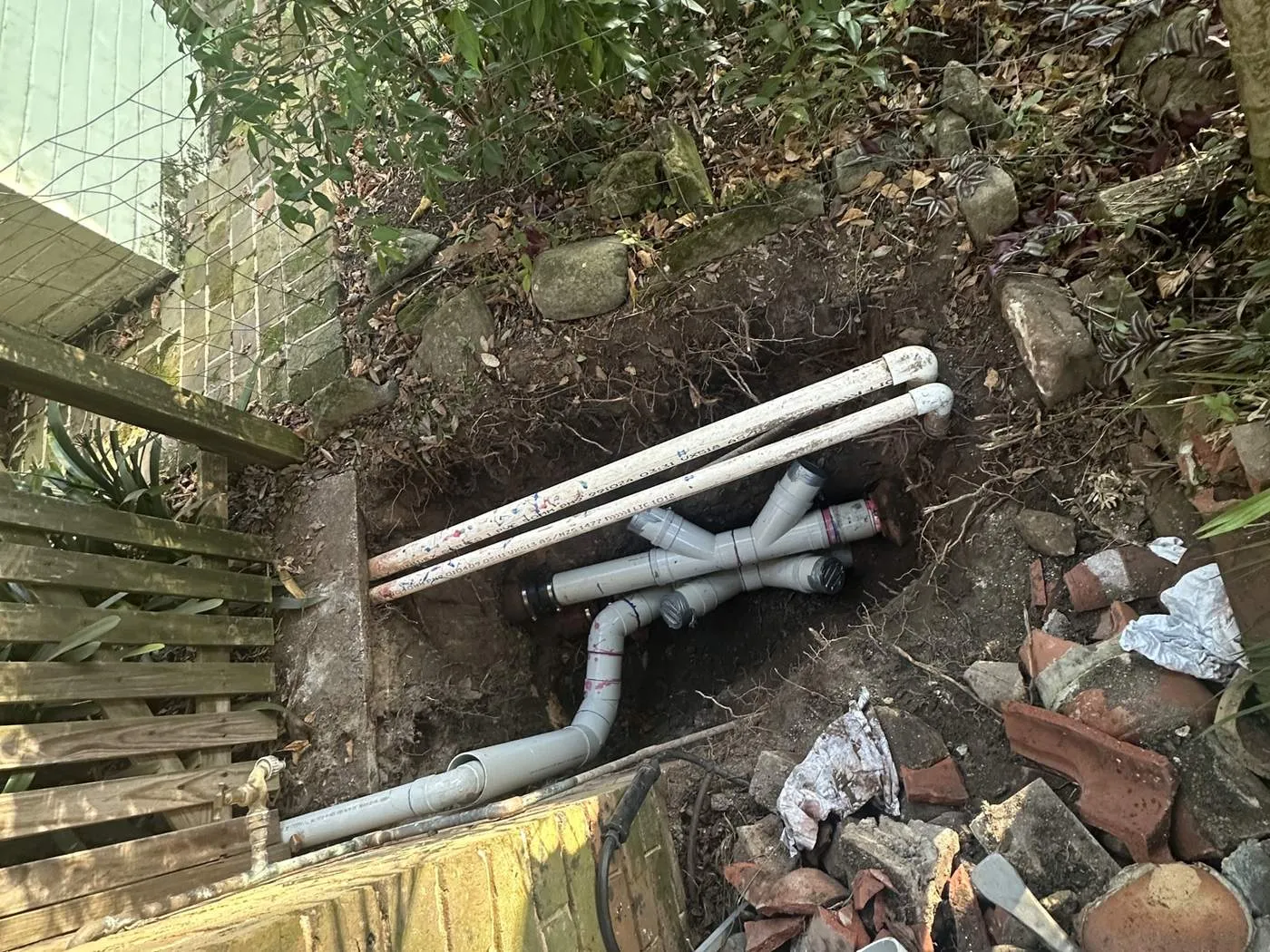
If your back yard is lower than the road, gravity is working against you. Water cannot flow uphill to the kerb, so it has to go down through the properties below to reach a public drain.
That is what an inter-allotment drainage easement is for: a legal right to run a stormwater pipe through a neighbour’s land. North Sydney’s plan requires one where stormwater cannot reach the road without first passing through adjoining private property, and says it should be sought by negotiation, mediation, or under section 88 of the Conveyancing Act 1919.
What owners usually do not realise about easements
- The pipes stay private. North Sydney’s plan says inter-allotment drains through private property remain the owner’s responsibility, unless the council is named on the title as responsible for maintaining the easement.
- Nothing goes on top of them. Physical obstructions should not be placed within an easement or its emergency overflow path.
- They carry a set amount. Pipes in an easement are only allowed to carry the stormwater they were designed for, and damage from unapproved connections can lead to a claim.
If you are buying a fall-away block, check the title for a drainage easement before you exchange. If there is none, ask how the property drains today.
Want this looked at rather than guessed at? Voyager agrees a fixed price before the work starts, and there is no callout fee on eligible jobs.
Call 0485 028 787 or read more about stormwater drains on the North Shore.
Retaining wall drainage
A retaining wall holds back soil, and soil holds water. When rain soaks in behind a wall with nowhere to drain, the water builds up pressure against the back of it. That is why walls lean, crack and weep, and why the drainage behind a wall matters as much as the wall itself.
A properly drained wall normally has:
- A slotted subsoil pipe along the base of the wall on the soil side.
- Free-draining gravel behind the wall around that pipe, so water reaches it rather than sitting against the wall.
- Somewhere legal to go: the pipe connected to the property’s stormwater system, never into the sewer and never just dumped onto the neighbour’s side.
The planning rules point the same way. For a retaining wall built as exempt development, the NSW Planning Portal lists conditions including that it must not redirect the flow of any surface water or ground water, or cause sediment to be transported onto an adjoining property. A wall that pushes its water next door fails that test.
If you have an older wall with no drainage behind it, our team can install a subsoil drain behind the wall without rebuilding the whole thing in many cases.
Keep stormwater out of the sewer
Stormwater and wastewater are two separate systems in Sydney. Sydney Water runs the sewer and your council manages stormwater, and the two are not meant to mix.
Sydney Water’s Wastewater Fix program inspects private properties because stormwater getting into the sewer overloads it in wet weather. The common ways it gets in, according to Sydney Water, are:
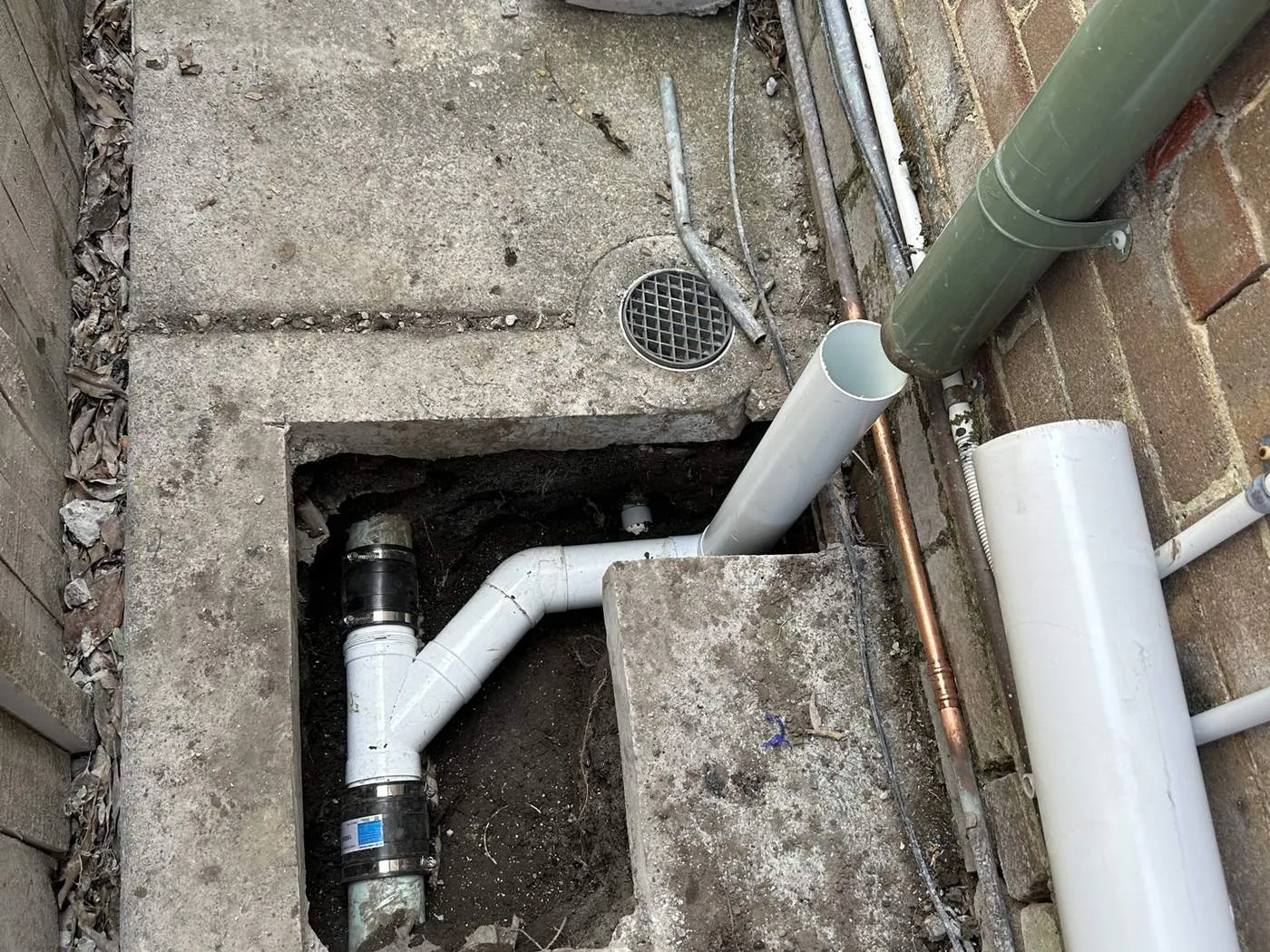
- Stormwater downpipes wrongly connected to private wastewater pipes.
- Cracked, damaged or poorly sealed private wastewater pipes that let groundwater in.
- Damaged or low-lying overflow relief gullies, which are meant to keep stormwater out of your wastewater pipes.
The gully is worth checking on a sloping block, because surface water running down a path can pour straight into it. If yours sits at or below the ground around it, read how the overflow relief gully works and the height it needs to sit at.
Signs your stormwater is not coping
Most stormwater problems show themselves in or just after heavy rain. Next time it pours, take a walk around the property and look for:
- Water pooling in the yard that is still there a day later.
- Water in the subfloor or damp, musty smells under the house.
- A wet face or leaning top on a retaining wall.
- Gutters or pits overflowing while the downpipes below them run slowly.
- Soil washing out of garden beds or across paths.
- Water bubbling out of a pit or out of the overflow relief gully.
The quick checks you can do yourself
- Lift the grates on your stormwater pits and clear out leaves and silt.
- Check each downpipe actually connects into a pipe at the bottom, and is not cracked or loose.
- Look at the kerb outlet out the front during rain. If nothing comes out, the line is likely blocked somewhere between the house and the street.
How stormwater drainage is fixed on a sloping block
The fix depends on where the water is coming from, so the first job is finding out. On a blocked or damaged line, that means clearing it and running a camera through to see the condition of the pipe.
| Problem | Usual fix |
|---|---|
| Downpipe or line blocked with leaves, silt or roots | Clear it, then camera the line to check for damage |
| Surface water running down the slope onto the house | A French drain across the slope to intercept it |
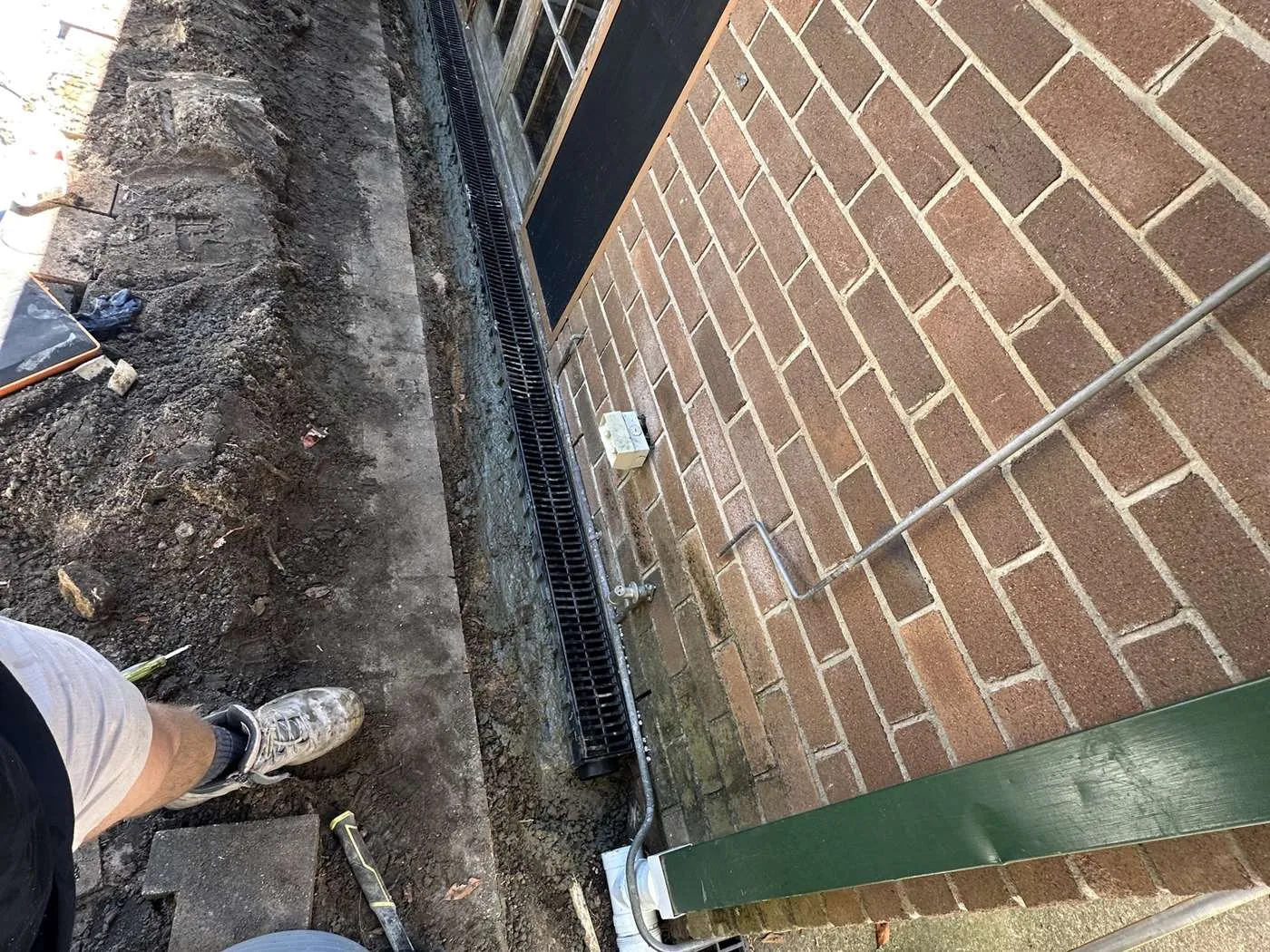
| Water pooling along the base of the house or a path | A channel drain or grated pit connected to the stormwater line |
| Water building up behind a retaining wall | A subsoil drain and gravel behind the wall |
| Broken or collapsed stormwater pipe | Repair or replace the damaged section |
| No legal discharge point downhill | An inter-allotment easement or an alternative approved by council |
Indicative costs for the diagnosis
Across Sydney, clearing a simple drain blockage usually runs $150 to $400, high pressure jetting $250 to $600, and a CCTV drain inspection $250 to $550. These are indicative ranges to judge a quote against, not a quote. New drainage is priced on the site, because the length, depth, access and fall all change the job.
When council gets involved
Any work in the footpath or road needs council approval first. North Sydney’s plan, for example, says stormwater drains may not be built on public property without a street opening permit, a construction certificate and a council-approved design. Work through a neighbour’s land needs the easement sorted before anyone digs.
For anything from a blocked downpipe to a full redesign of how a steep block drains, we handle stormwater drainage work on the North Shore and can tell you what your property actually needs. If you are not sure where to start, the local plumbers on the North Shore at Voyager can come and look at it in the rain or after it.
Frequently asked questions
Can I let my stormwater run onto my neighbour's property?
No. Council rules on the North Shore say drainage from private property should not cause nuisance drainage to any other property. If your block can only drain through the land below it, you need an inter-allotment drainage easement, or another solution council accepts.
Who maintains a stormwater pipe in an easement?
Usually the owner it serves, not the council. North Sydney’s development control plan says inter-allotment drains through private property remain the owner’s responsibility unless the council is named on the title as responsible for maintaining the easement.
Does a small retaining wall need drainage?
Any wall holding back soil benefits from drainage, because water building up behind it is what pushes walls over. For walls built without approval as exempt development, the NSW rules also say the wall must not redirect surface or ground water or push sediment onto an adjoining property.
Can my downpipes go into the sewer?
No. Stormwater and wastewater are separate systems, and Sydney Water lists downpipes wrongly connected to private wastewater pipes as one of the most common ways stormwater gets into the sewer. They should run to the stormwater system.
Why is water pooling in my yard after rain?
Usually a blocked or broken stormwater line, a pit that has filled with silt, or surface water from uphill with nowhere to go. A camera inspection of the line and a look at the slope in wet weather will normally show which one it is.
In short
Stormwater on a sloping block has to reach a public drainage system without causing problems next door. Blocks that fall away from the street usually need a drainage easement, and those pipes stay the owner’s to maintain. Drain retaining walls with a subsoil pipe and gravel, keep stormwater out of the sewer, and get a blocked line cleared and inspected before a heavy storm finds the weak point.
Need a licensed North Shore plumber?
Free quote, a fixed price agreed before the work starts, and someone on the end of the phone at any hour. No callout fee on eligible jobs, subject to current terms.
Call 0485 028 787Get a free quote
NSW Contractor Licence 476657C · fully insured · 24/7
Share this guide
Read it with an AI assistant
Mathew is a licensed plumber, drainer and gasfitter, and the owner of Voyager Plumbing. He has held his own NSW contractor licence since December 2016 and is the nominated supervisor on the company licence.
Voyager Plumbing works across Sydney’s North Shore. NSW Contractor Licence 476657C, fully insured, available 24/7.
Sources